




The Art of Tanchoi Weaving
The Banarasi Tanchoi saree actually began its journey far from Varanasi. In the nineteenth century, Parsi trading families helped bring Chinese-inspired satin-weaving know-how to Surat, where local silk weavers made it their own. From there it moved through India's textile markets to Banaras. Weavers there gave it local motifs, richer pallus and a distinctly Indian sense of occasion. You'll often hear the story of three Parsi brothers who learned the technique in China. It's a cherished part of Tanchoi's heritage, though the details change depending on who's telling it.
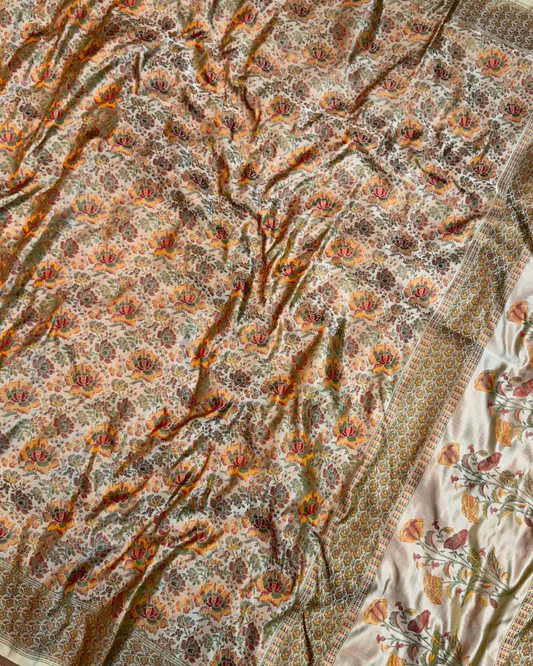
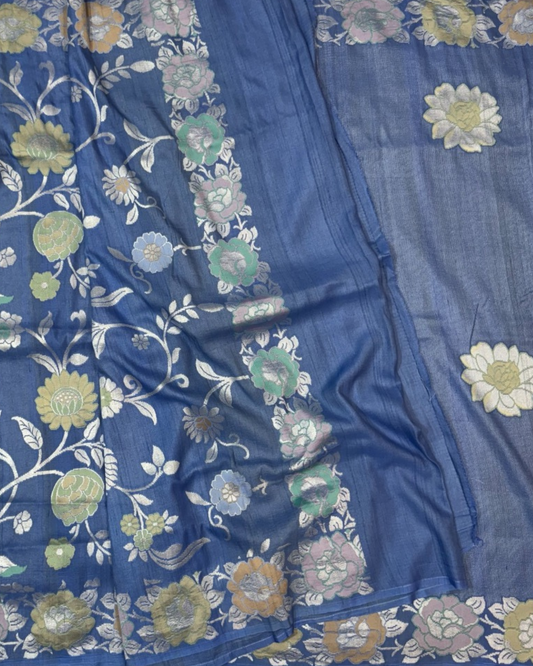
On the loom, Tanchoi gets its signature sheen from a satin weave. One or two sets of warp threads form the base, and several shades of silk weft build the pattern right into the cloth. Those coloured threads give an almost embossed look. Paisleys, flowers and delicate birds seem to glow in relief, even without a strand of metallic zari. And because the extra silk wefts are woven into the structure instead of hanging loose, the fabric feels beautifully smooth.
That silk-on-silk detail is what makes a satin weave Banarasi saree such a pleasure to wear. Many Tanchoi styles are lighter and more supple than zari-heavy brocades, so the pleats settle easily and the pallu falls softly over your shoulder. Denser Jamawar silk sarees have a fuller, more enveloping drape, which is lovely for a winter wedding or an evening reception. Add a velvet blouse or a fine shawl and you'll look festive without feeling weighed down.
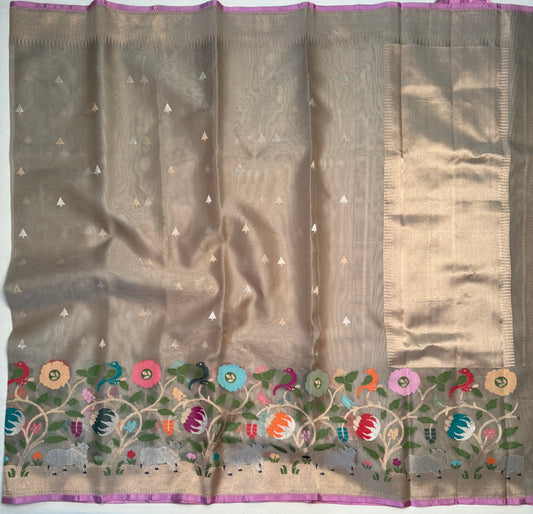
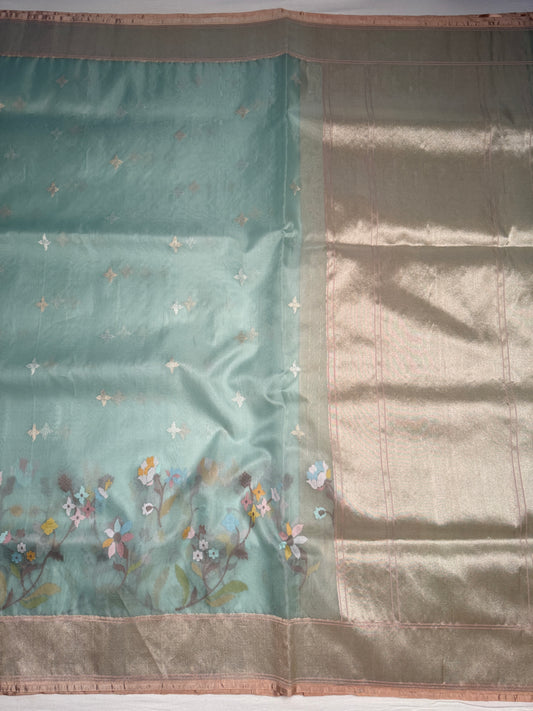
Our Tanchoi and Jamawar collection at Hamjoli Banaras celebrates this blend of travel, tradition and craft. Go for a subtle tone-on-tone pattern or a richly figured weave. Either way, the luxury is in the silk itself, not just the shine.