








Meenakari Banarasi Sarees: Where Colour Meets Royal Craftsmanship
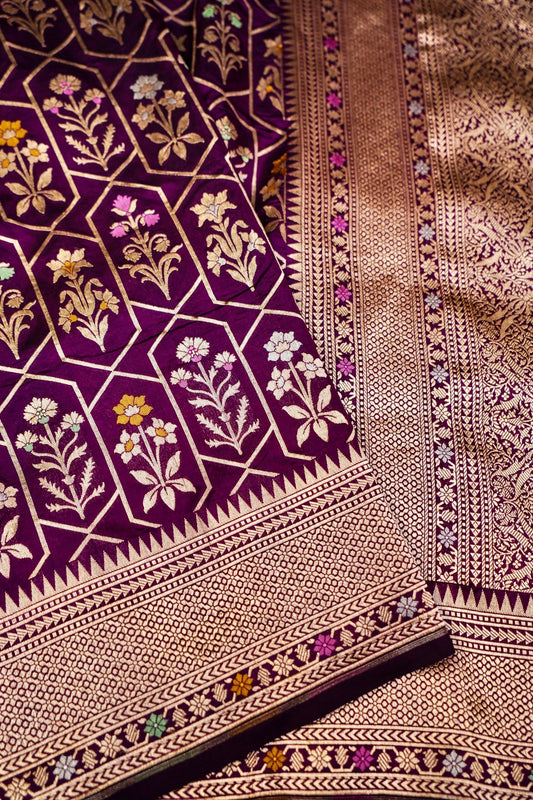
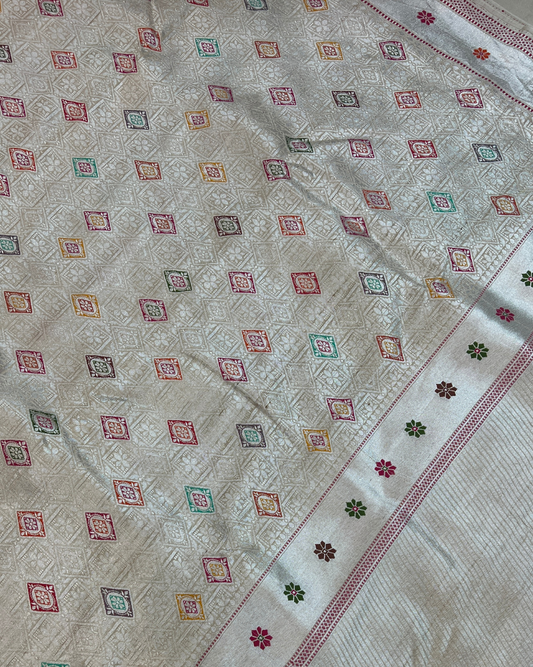
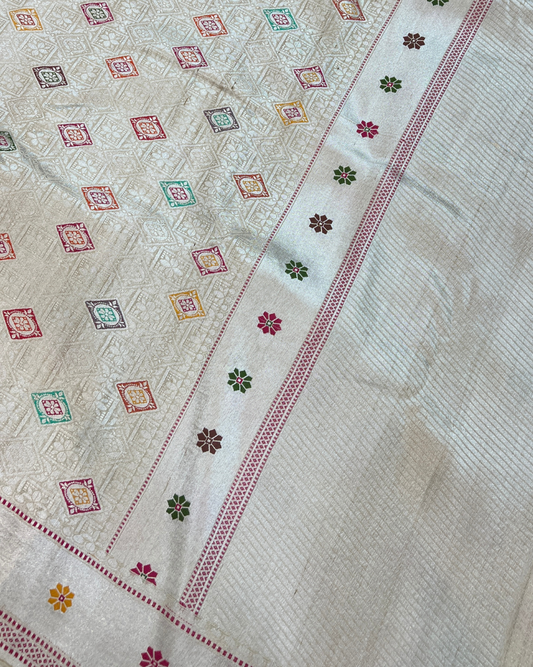
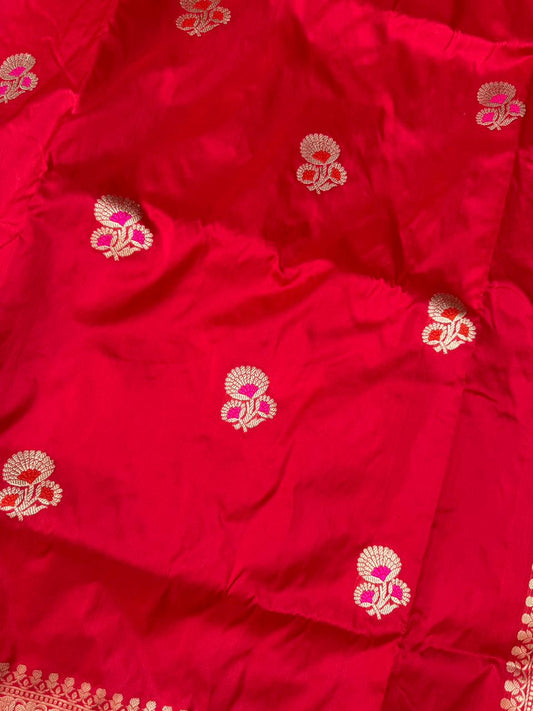
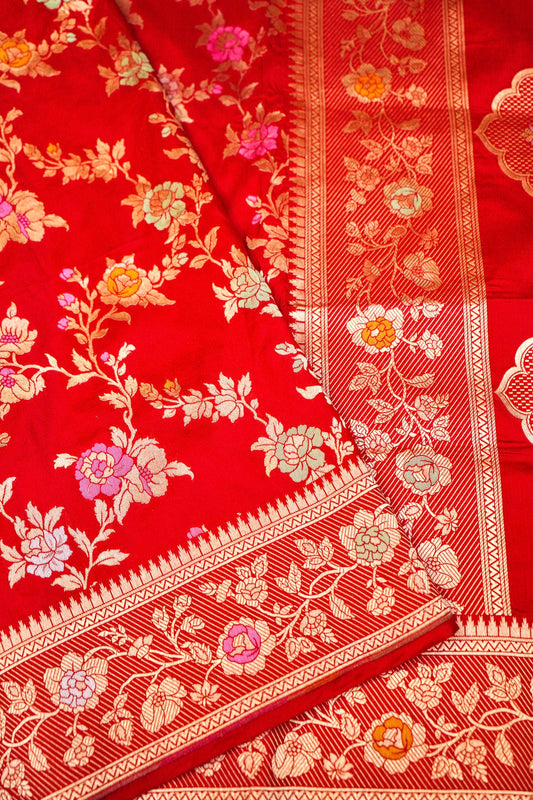
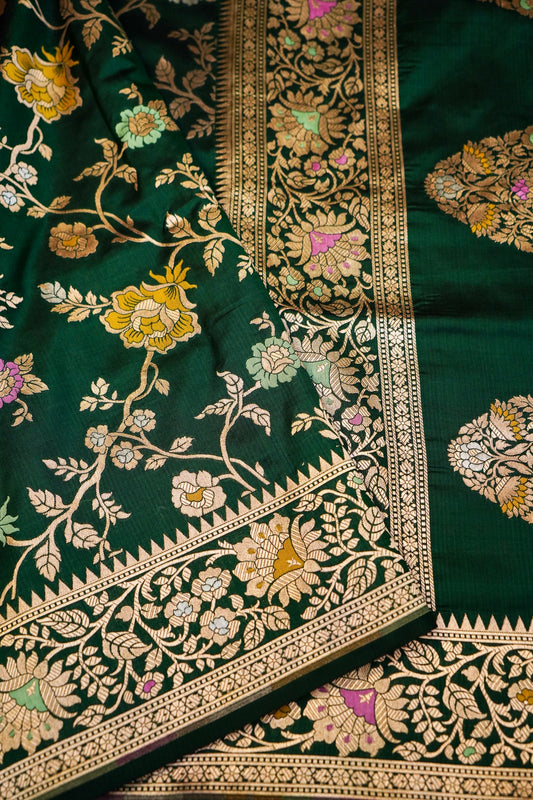
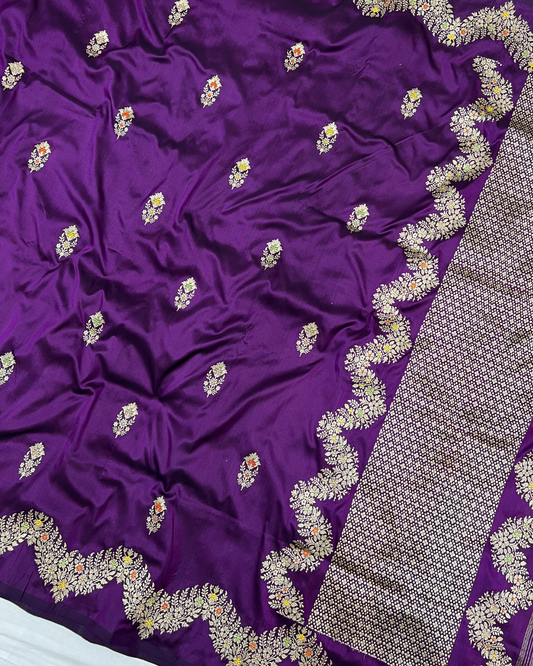
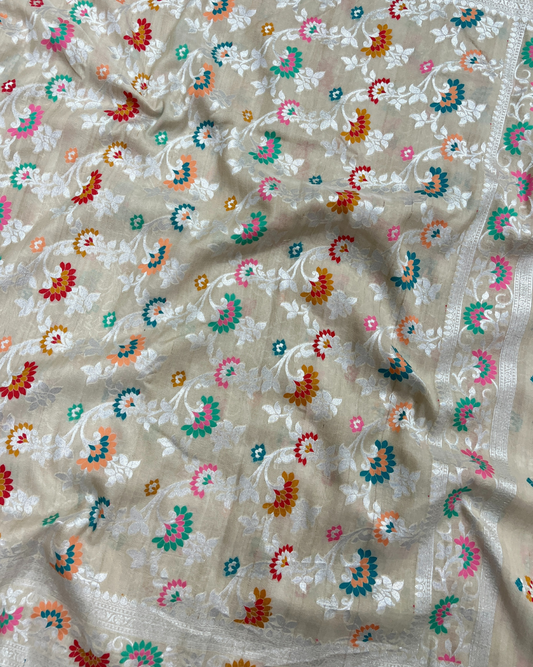
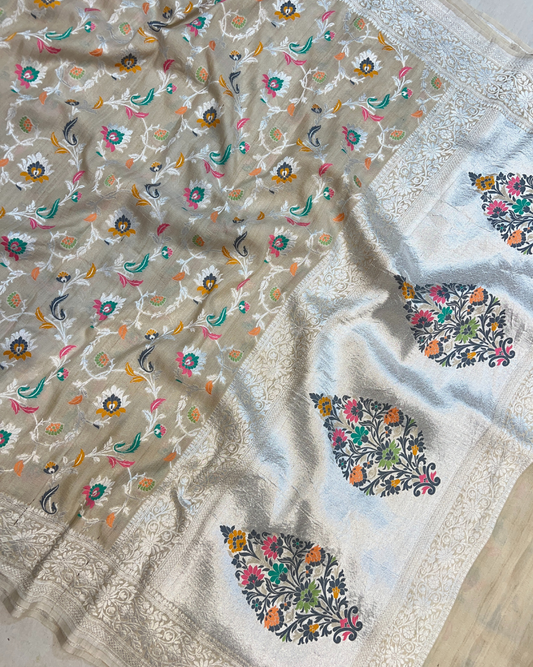
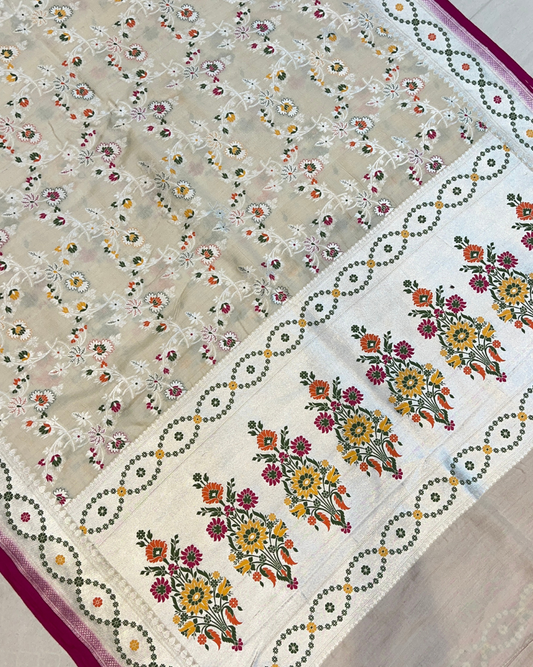
In Varanasi, Meenakari means giving a woven motif the richness of enamelled jewellery. Rather than leaning on metallic shine alone, weavers add extra coloured resham threads alongside fine zari. Petals, leaves and slender borders take on a jewel-like depth, and the silk underneath becomes a soft canvas for every shade.
The Tilfi Banarasi saree takes this play of colour even further. It's traditionally linked to three coloured yarns in the weft, and the weaver has to coordinate them carefully so each hue lands in exactly the right part of the motif. What you get is a multi coloured zari saree full of layered detail: a ruby flower next to an emerald leaf, maybe with a flash of gold. None of it is painted on. Every colour is woven into the cloth.
The patterns tell stories, too. A floral jaal spreads vines and blossoms across the body of the saree like a garden that never ends. Shikargah-inspired designs go a step further, weaving deer, birds and other woodland creatures into the fabric. Both echo the pictorial imagination of classic Banarasi brocade. For a structured, ceremonial drape, choose rich Katan silk. If you'd like a softer glow, look at our airy tissue and Tussar georgette styles.
Putting together a bridal trousseau? Deep red, purple or green with a Meenakari pallu will frame your wedding portraits beautifully. For a reception or festive evening, ivory and ash-white let the coloured motifs really stand out. Pair a busy saree with a plain silk blouse, or pick up one resham shade in the blouse piping.
At Hamjoli Banaras, every Meenakari Banarasi saree is an invitation to wear colour, heritage and a little of yourself. Enjoy it now, and keep reaching for it, occasion after occasion.